Your cart is empty
Featured Event
Log Out
Jun 12, 2026 10:00 AM - Jun 17, 2026 12:00 PM

Wishing to log out for a few days , sense yourself and others, breathe, move in silence or accompanied by musicians, independently or in contact (Contact Impro, Somatics,Ecosomatics, Dynamic meditation, Tribe, Bodywork) Limeja, near the Croatian Lim Bay reserve, is the right place for that.
From June 12th (10 am) to 17th (12 pm) the dance floor is open every day from morning to late evening (11 pm).
Environment for staying, meditating, walking, swimming.
The invitation is especially aimed at non-professional lovers of movement, dance, music, contact, nature and physical therapy.
Food is not organized, so it is recommended to bring your own supplies and gas cookers. Eating utensils are available on site, as well as two refrigerators and large washing tubs. 15 minutes by car is a large shopping mall.
Limeja is a Vegan place.
Toilets and showers are outdoors, well arranged.
Log Out means disconnecting from phones, watches, laptops, and recorded music. Music is performed live.
Conversation is not desirable on or near the dance floor, so as not to disturb the atmosphere of relaxation, exploration, support, help, laughter, singing, and presence.
Talking circles take place every morning on the dance floor where it is possible to express needs and impressions verbally.
In case of rain, the dance floor has curtains.
Bring warmer clothes for the evenings.
For those who wish to abstain completely from verbal communication, a ribbon can be worn as a sign.
Location: Monter 11, HR-52210 Rovinj, Hrvatska
https://maps.app.goo.gl/3oy8hMZcXZzHx81n6
A beautiful beach and viewpoint are a 10 minute walk away.
In the evening, a fire is lit on the dance floor from 8 to 11 pm. There are enough instruments and everyone who wishes to express themselves through voice, playing, or dance is welcome.
Drinking water is available.
DAILY PROGRAM
10:00–12:00 – Talking circle12:00–19:00 – Open dance floor, live music/silent (NT Wave & Ant + guests)20:00–23:00 – Meditation and dance by the fire, collective sound creation
The initiator is Valent Samardžija (NT Wave), spiritus mouvens of VatrePlamBubnjaBam, Vreeelo, CI Jams in Tango Garden, Kolo Trance, Collective Sound Making, Beat Busters rhythm performances and workshops, a long-time (40 years) intuitive and ethno musician.Anita Mavrović – Ant performs music for contact jams.
Daily (24 hours) participation: €50 per personGas cookers may be used in the kitchen area with care.Campervans and caravans are not allowed.
REGISTRATION FORM: https://forms.gle/zKNWQ7Nh4b4CHhyH8
RECOMMENDATIONS
• Take time to warm up and stretch • Wear comfortable clothes without jewelry, knee pads recommended • Bring a water bottle • Take care of yourself, others, and the space • Avoid verbal communication • Follow intuitive impulses for movement • Explore and get to know dancing partners patiently • Observe from the edge, not the dance zone • Choose freely whether, with whom, and how long to dance • Leave the dance without guilt • Explore solo, in pairs, or in groups • Leave phones in accommodation
Why silence?
Yevhen Yovk - Yu Gen is a dancer who brought the practice of contact improvisation to Georgia. A part of the text that talks about silence:
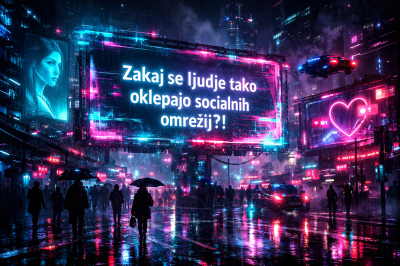
Never in human history has our brain processed so much information as it does today. Much of this information is superficial (social media), distracting and reducing the ability to think and feel, alienating us.
Today, it is not acceptable to be silent: you need to constantly talk, write, remind others of yourself in order to be noticed. A person who is silent arouses suspicion, “what if they are hiding something?” We respond to many requests every day, confirming our social context, thus proving that we are “safe for others”.
Casual conversations, business conversations, online chat, social networks, “smart watches” - all this requires us to be engaged, visible and reactive. Everyone wants an answer immediately, so socialization becomes repressive. We often do not have time for an authentic answer, so we give automatically (“I am fine”), we feel superficial, and the next time we answer again unconsciously. In a culture of positive thinking, insecurity, doubt and suffering are undesirable feelings for conversation.
The growing sense of irrational guilt creates the perfect conditions for political manipulation and the dominance of "media truth" enabling the establishment of complete control over the individual and society. Social networks have made us visible in order to meet the standards of the community at the cost of our own identity, through our presentation. Preoccupied with answering others, we have stopped asking ourselves questions.
The possibility of self-presentation has turned into an obligation to put our lives and bodies into text and images, to digitize them.
How many people can now feel their own weight, at the moment you ask them about it? I interviewed 20 people on the street, asking them: "Can you feel your weight and volume right now?" Four people answered in the affirmative. This incidental statistic suggests that most people are so absorbed in the digital (weightless) experience of themselves that they are not even able to feel their own weight.
The inability to physically feel your own weight calls into question your entire existence.
It is this fear of nonexistence that underlies inactivity, depression caused by social networks and political conformism.
I think that communication between people is becoming more formal and superficial, and the situation is exacerbated by another problem, which is the culture of social fear, where touching is forbidden.
In 2020, you can't be sure that your touch won't be interpreted as an invasion of personal space and that you will be accused of harassment. Sure, you can ask for permission verbally, but touch is a language in itself (which we are still developing). We come to situations where we absurdly have to ask permission in order to ask.
What should protect us from violence turns into a heavy wave of repression that divides us. In the end, we decide not to touch at all.
The situation of sensitive people today is similar to that of intellectuals in totalitarian systems. It was wiser not to think at all, and those who did were at risk of being expelled. Similar to the atmosphere these days, the rules are constantly changing and you can't predict what will cause public accusations that could lead to social harm. It is safer not to feel anything.
Verbal and nonverbal communication are essential parts of human existence and our collective survival. We love belonging to a group and we learn and grow within it.
But what can we do when trends lead to a dilution of communication? I will share some ideas about Contact Improvisation:
Contemporary dance is always at the forefront of contemporary art, because the body is the first to respond to the changed conditions of the environment, and movement is the visible manifestation of this response.
Contact improvisation, 50 years ago, began as a performance project that experimented with the perspectives of philosophy, science, art and sport.
Its creators did not copyright the form, so it did not become another certified dance technique, but remained open and expanded into many dimensions - philosophical, social, psychological. Ultimately, I think that contact improvisation is a mirror that reflects the body's response to the questions of the environment.
Contemporary contact improvisation is not quite what it was in 1972, mainly because the research was much broader than the practice. Today, on the contact pit we can meet people with different abilities and goals: athletes for whom it is an experiment with movement, dancers for whom it is a beautiful technique of partner dance, young people for whom it is an international party of hugs, elderly people and people with disabilities for whom it is an opportunity to socialize in an inclusive environment, people for whom contact dance has become a philosophy of life and a way of finding answers to spiritual questions. The list goes on. Contact improvisation as a social phenomenon has not changed, but has expanded.
I would emphasize the aesthetic aspect of contact dance, the psychological effect of inclusiveness, the oxytocin that is released when dancing contact improvisation.
When I met Steve Paxton in Brussels (2019), I asked him a question. “Steve,” I said, “You and those with whom you started contact improvisation, sooner or later you will die. Have you thought about what will happen to the practice after you?”
He replied: “Of course I have. Everyone who is practicing now, teaching, organizing, will create some kind of contact improvisation according to what they understood from what we did.”
The idea for the Nonverbal Contact Festival was born in 2016. We organized a small festival at a ski resort and I thought: “It would be great to have a day of silence in the middle of the festival, so that no one bothers us with questions and so that we can relax.”
It turned out great and since then we have had several nonverbal communication festivals.
I have a diverse background in nonverbal communication (NVC). This includes: Vipassana retreats, communicating with my daughter before she could speak, and my extensive experience traveling to foreign countries.
I remember on my first trip to China, not knowing a word of Chinese, I realized that speech is just one of the communication tools and that direct understanding is possible at the level at which children who do not yet speak understand each other.
This is a big topic. I would say that spoken language is, first of all, a model of logic associated with thinking, and only then a means of communication. Perception and expression through speech are mutually exclusive, when you stop talking, you begin to hear, see, feel. If we reduce the power of words for a while, the brain will begin to connect alternative symbolic systems and the sounds, colors, smells, sensations and feelings of the world will appear instead of their textual projections. This makes a person’s experience multidimensional, “multisensory”.
Maybe verbal communication is a way to protect ourselves from each other?
What if, when we talk, we build a mental image of ourselves and present it to others? In essence, these are our external projections that communicate. It often happens that when you are alone with someone you like, you both awkwardly start talking nonsense. What if we don’t do this? What would happen to us?
All these questions led to the design and creation of the first nonverbal contact festival. I came to Georgia in 2018 in search of a place for the festival. The first edition was held on the Black Sea coast. It was a wonderful and challenging experience. My first task was to involve the trainers in the new idea of a nonverbal curriculum. My second task was to involve the participants in the new format. People are usually not willing to pay for experiments and want something familiar.
The dancers had lunch together, touched each other, exchanged long looks, looked for ways to understand each other more deeply. Creativity is triggered. And yes, there was a lot of laughter at this festival. The central themes about the festival in the post-discussions were: what silence means to each individual.
Some participants followed our idea, while others expected complete silence. In this format, we explored non-verbal ways of communication. People could laugh, make expressive sounds, play, sing in a meta language.
Taking into account the previously mentioned challenges of modern life, such as the imperative of constant response to stimulation and the prohibition of physical contact, we are creating a space where we can be ourselves without verbal expression, and stay in touch, literally and metaphorically. We are glad that the idea was valuable to many participants and trainers who come and support the festival every year. Together, we are creating a space where answers are not needed, and contact is possible.
If you think about it, it is quite difficult to describe the past and future without words. When all you have at your disposal is gesture, eyes and telepathy, all you have left is presence, being in the present.
We found that the learning process in silence was more influential and that our ability to improvise and find creative solutions increased enormously. I think we discovered something valuable. Of course, in order to hear others, you have to silence yourself.
So silence is not always isolation or loneliness, sometimes it is just about opening up space for others and listening. We also remain silent when we encounter something unknown. Something that impresses and amazes us so much that we cannot find words, something that leaves us speechless... In a way, at the heart of philosophy is silence.
CI community Slovenia guidelines
Musicians: NT Wave w. Ant
https://www.facebook.com/valent.samardzija
https://www.facebook.com/anita.mavrovic
C.I. Videos (Contact Improvisation)
Beginner tip sheet TEKST
Interesting SITE about C.I.
Location
Limeja
Monter 11
Rovinj, Croatia
Registration
Registration is currently closed.



Comments (0)